
Modular sensing for robots
A plug-and-play board for cameras and sensors across the whole robot. Even the big ones.
Value Proposition
Wiring is not your job
Get your sensors and cameras running in minutes
Stop losing hours to sensor configuration, camera setup, wiring checks, or jumper debugging. Focus on perception, autonomy, and field testing instead.
Move from part selection to system design
NXS turns 2K+ sensor options into validated configurations, helping you choose hardware that fits together before the build begins.
Don't let wiring decide the design
With CAN, GMSL, and serial connectivity, NXS helps place modules across large robot bodies, inside limbs, enclosures, and remote areas that are usually hard to reach.
Reviews and online
Read what others published
CNX Software
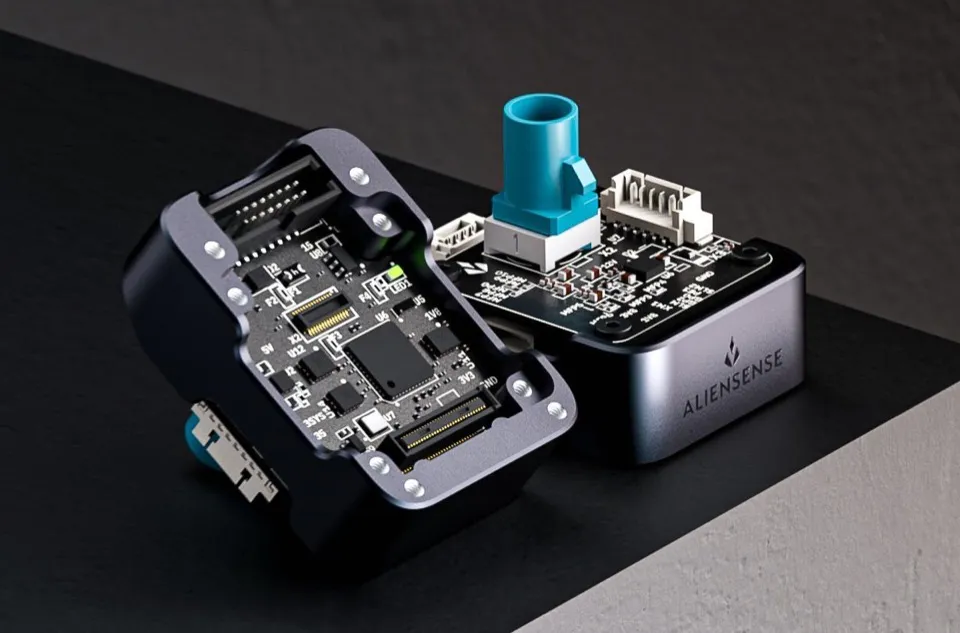
Aliensense NXS is a plug-and-play GMSL 2/3 and CAN-FD sensor board for robots
Abu Dhabi-based Aliensense has introduced NXS, a compact sensor board designed to easily connect cameras and sensors to robots, without custom wiring or driver work.
Product Hunt
NXS by Aliensense: a sensor board that gets your robot running in minutes
It handles the wiring and driver setup automatically, so cameras and sensors are streaming usable data in minutes instead of weeks.

Open Robotics Discourse
NXS: ROS 2 topics for GMSL2/3 cameras and CAN-FD/serial sensors, no custom bridge
Camera or sensor needs to sit far from compute, and there is no clean way to get data back without writing bridge code and fighting timing between nodes.
Open Robotics Discourse
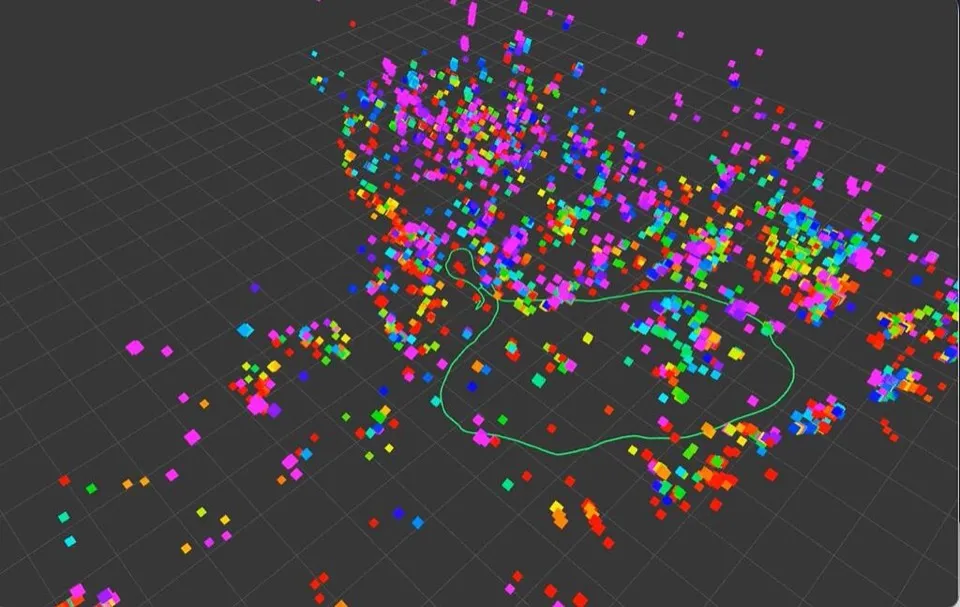
First VIO demo: global-shutter camera + IMU streamed over one GMSL2 coax, mapped live in ROS 2
A global-shutter camera and IMU share one GMSL2 coax for data and power, estimated in real time on a Jetson with ROS 2 and OpenVINS. Return-to-start after a 25 m loop: 42 cm.

Open Robotics Discourse
Three bugs that changed how our sensor board talks to ROS 2
micro-ROS ate 60% of flash before any of our own code. The device speaks Cyphal now, and ROS 2 runs host-side behind a thin bridge.
Go beyond the bench
For robots that leave the lab
Turning prototypes into working robots in no time
Bench prototyping
Connect, test, and validate camera and sensor setups before the robot is built.
Start from a laptop or x86 configuration, then carry proven configurations into deployment.
Autonomous mobile robots
Extend rovers and field machines with networked sensor nodes that fit your existing architecture.
NXS runs as a Cyphal node over CAN-FD or serial, publishes measurements in physical SI units, and supports multiple nodes on one bus.
Distributed sensing
Place cameras and sensors across the body, not just where wiring is convenient.
GMSL carries camera data, power, and sensor data over one coax cable; CAN-FD and serial connect distributed sensing points.
Workflow
From plug-in to perception
Connect what you need
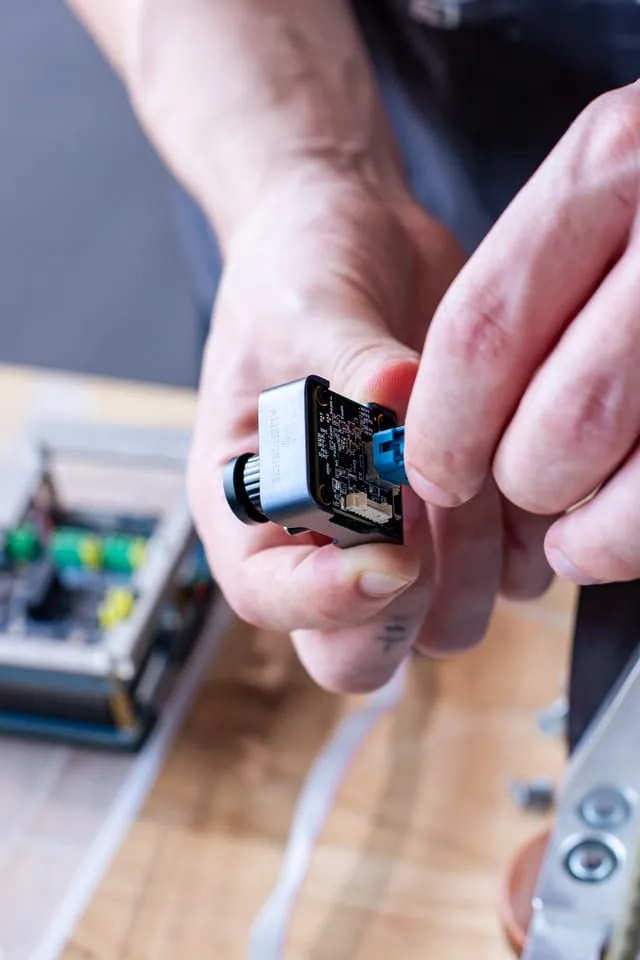
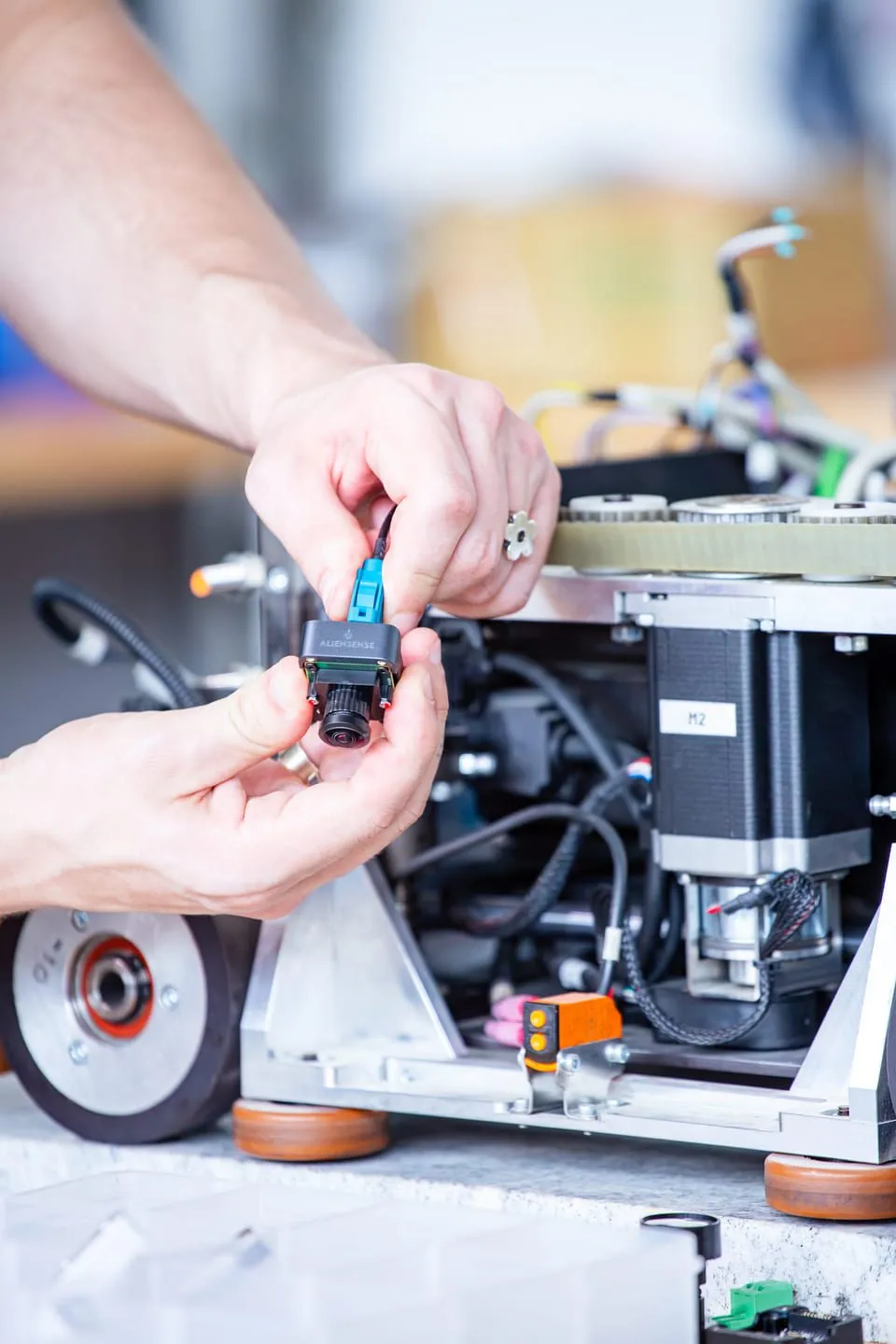
Plug in a compatible camera and sensor.
NXS sets it up
Drivers and communication are configured across CAN-FD, GMSL, or serial.
Build with real data
Stream camera and sensor data in standard physical units into your perception stack.
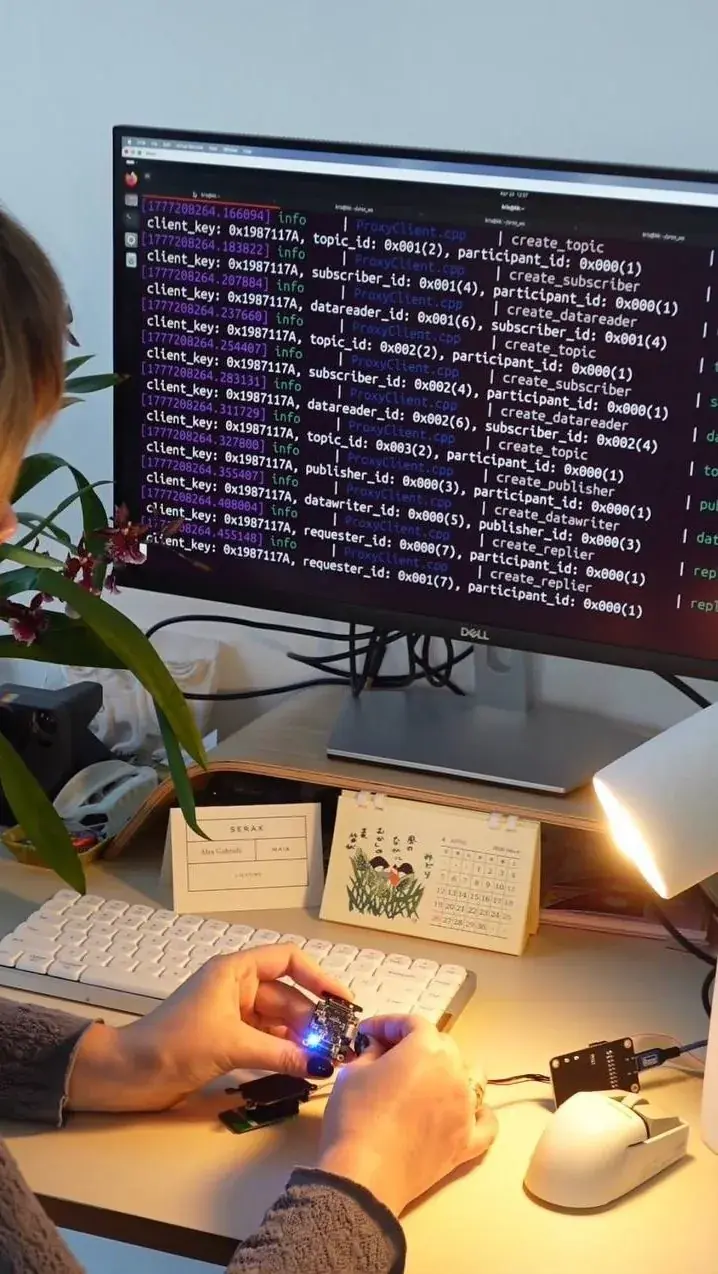
Get the highlights
Features for exceptional real-time scenarios
Synchronized timing
Timestamped samples and sequence data make readings from across the robot easier to align, fuse, and replay.
Auto-recovery
Signed A/B firmware, watchdog rollback, and serial recovery keep deployed nodes recoverable after failed updates or interruptions.
Scalable with a single interface
Probe, configure, stream, and inspect every connected sensor through the same commands and data model.
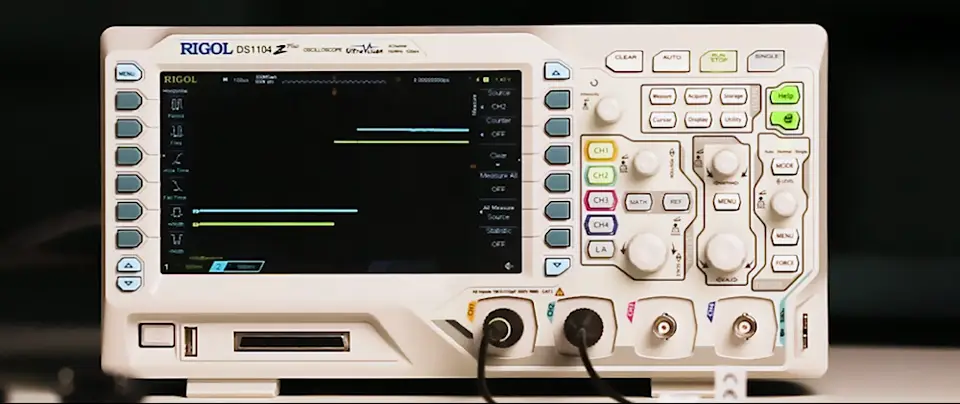
All the NXS-connected sensors, synced to sub-millisecond precision.
DEVELOPER EXPERIENCE
Connect hardware like it's Python
Simple commands that feel native to your embedded pipeline
ecosystem
Speed up your deployments
NXS integrates with the open-source robotics technologies and standards you already use

NXS turns readings into ROS 2 topics on the host, so your team can use them in perception and autonomy without building a custom bridge.

Keep distributed sensors and cameras in sync across the robot. NXS delivers the coordinated data SLAM, obstacle avoidance, and navigation need to work reliably.

NXS supports FRAMOS PixelMate™ C and FSM:GO modules, giving your robot reliable image quality, flexible sensor choices, and a clear path from prototype to production-ready computer vision.
We support any camera FRAMOS supports on the PixelMate™ C interface. That includes the FSM:GO modules (integrated sensor + PixelMate) and any bare sensor (IMX335, IMX296, IMX568, etc.) mated through a FRAMOS FSA/FSM sensor adapter that exposes PixelMate С.
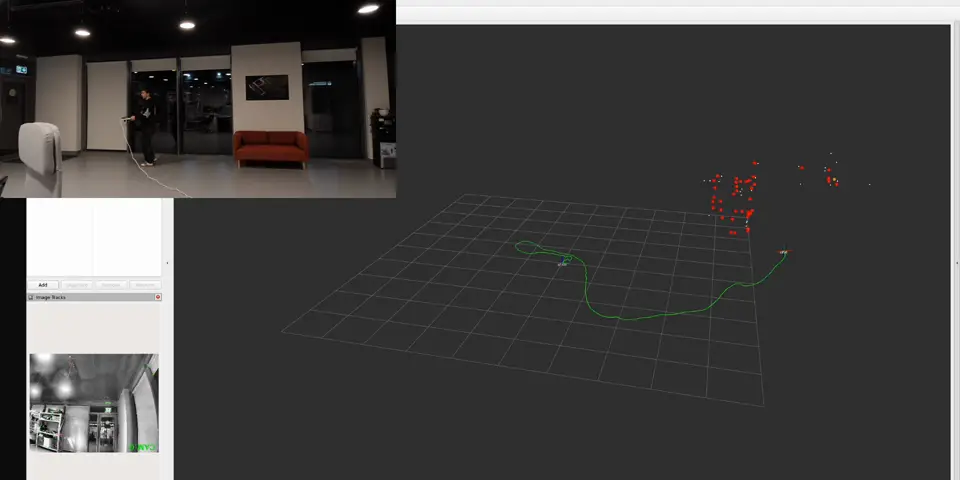
A tracked target arriving as a ROS 2 topic and drawing its path in RViz, beside the camera on a single cable.
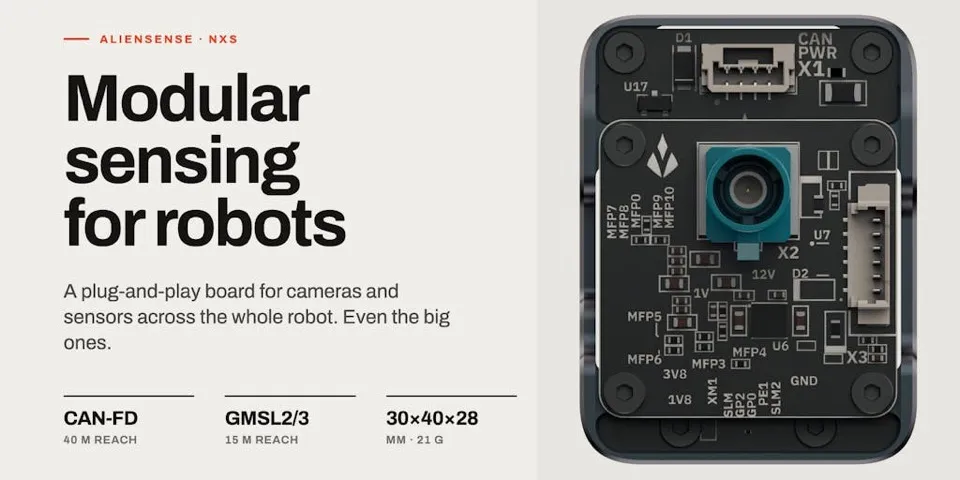
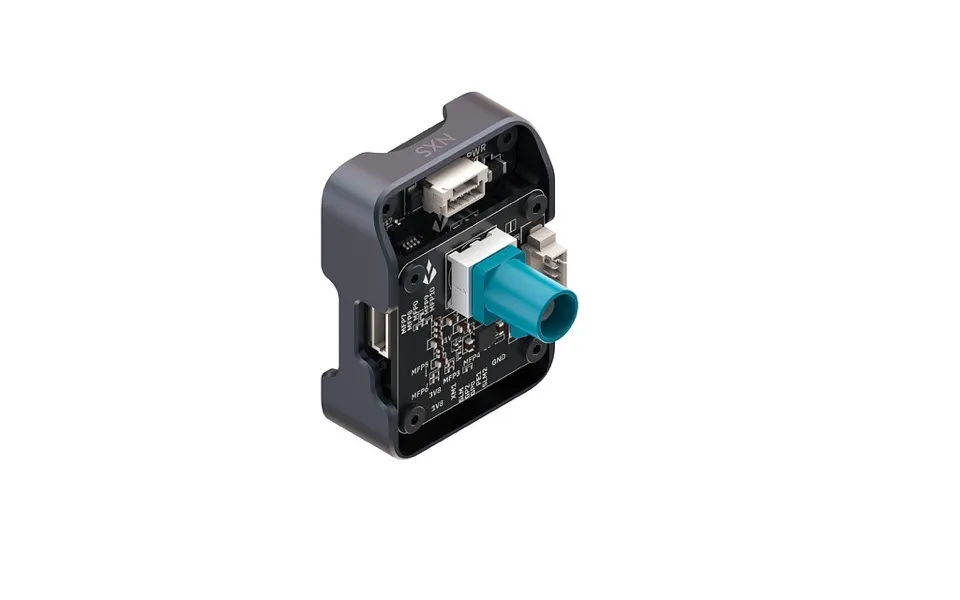
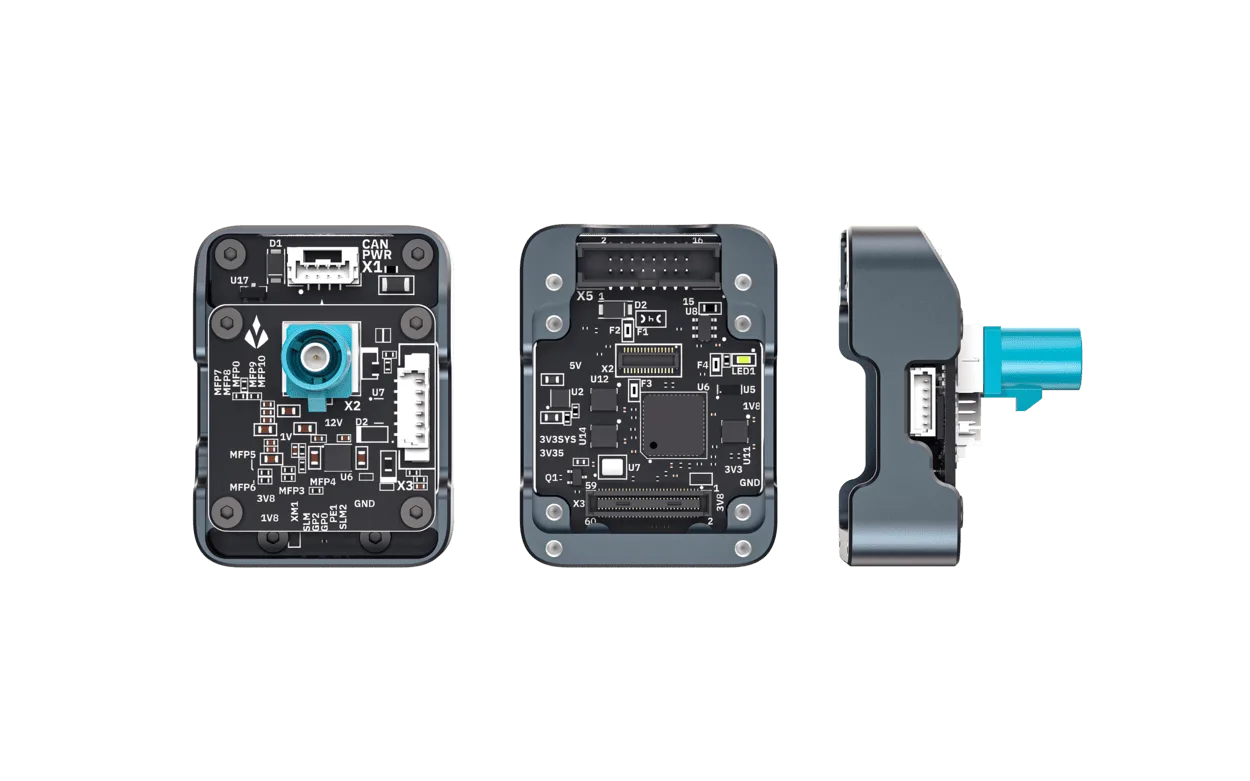
CAN connector. An automotive-grade CAN-FD transceiver with a built-in Cyphal node drops NXS straight onto your vehicle bus. One port carries 12 V power and sensor data up to 40 m, readable by stock OpenCyphal tools. Your network speaks a language your stack already understands.
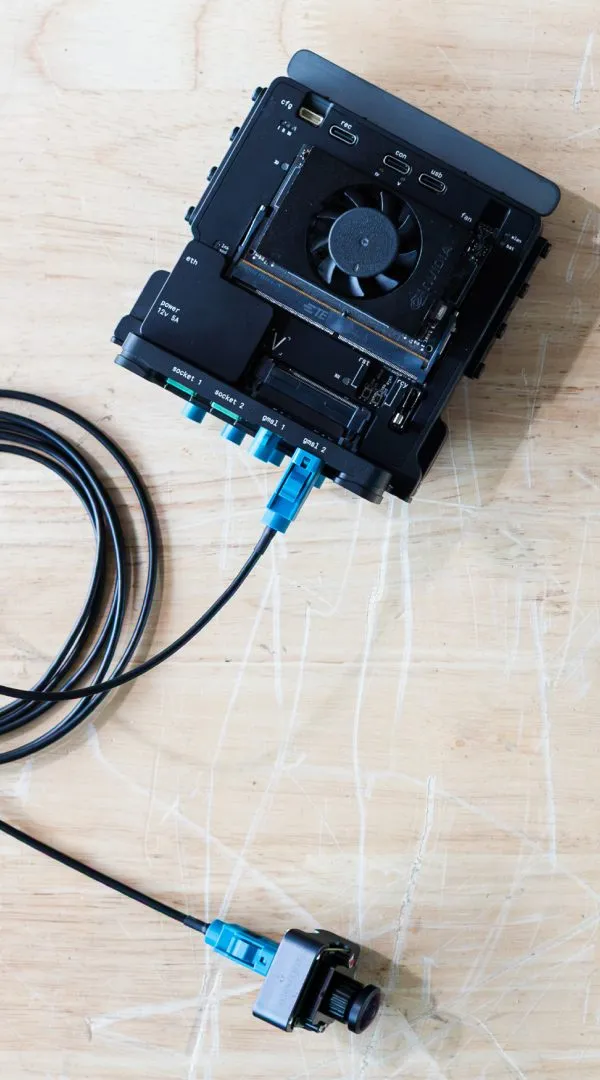
GMSL connector. One coax does it all. GMSL2/3 carries multi-gigabit video, Power-over-Coax, and tunnelled I²C sensor data over a single FAKRA cable up to 15 m. Fewer cables, fewer failure points, faster builds.
External power 12 V. NXS runs on a tolerant 4.7–16 V input, so any vehicle rail or bench supply works. And when your sensor chain outgrows Power-over-Coax or GMSL/CAN delivery, the auxiliary 12 V input with a spare UART keeps everything powered without redesigning your harness.
mikroBUS socket. Instant access to 2,000+ Click boards, with SPI, I²C, UART, PWM, AN, INT, RST and 5V/3.3 V rails. The MikroE catalog of sensors and peripherals is supported; the AI-agent skill generates drivers from the datasheet. Plug in a sensor, get SI-unit data. No firmware rebuild.
Auxiliary board connector. A 30-pin expansion port brings out the full mikroBUS bus, MCU UART, and fused 5 V/3.3 V/12 V rails: an alternative path to attach external VPUs, FPGAs, or custom boards when the mikroBUS socket isn't the right fit.
STM32 sensor co-processor. The 170 MHz Cortex-M4F runs an on-device virtual machine that executes portable sensor drivers and reports results in SI units with microsecond timestamps. Swap a sensor by uploading a driver, not by reflashing firmware.
Image sensor connector. A 60-pin DF40 mezzanine connects FRAMOS-class MIPI CSI-2 cameras directly: 2 or 4 data lanes, I²C control, frame-sync triggers, and sensor power on board. Pair it with the Aliensense MIPI adapter (available separately) to extend any MIPI camera up to 15 m from your compute.
Serial / debug UART. Always reachable, always recoverable. The SWD + debug UART header gives direct programming and console access, the same always-on link that carries Cyphal management at 460800 baud. Reflash, debug, and commission in the field with nothing but a cable.
Specifications
Technical specifications
Compute
STM32G491 Cortex-M4F co-processor with driver VM
Camera
MIPI CSI-2 input, MAX96793 GMSL2/3 serializer, Power-over-Coax
Sensors
mikroBUS socket with I²C, SPI, UART, PWM, analog, INT, RST
Connectivity
GMSL2/3, CAN-FD, Cyphal/serial, I²C register map
Timing
Timestamped samples, sequence data, up to 250 Hz serial stream
Data
Physical SI-unit outputs with self-describing field metadata
Power
12 V input, 4.7 to 16 V tolerance, Power-over-Coax support
Recovery
Signed A/B firmware, watchdog rollback, serial recovery
Environment
-40 °C to +85 °C operation, ±2 kV ESD protection
Size & Weight
30 x 40 x 28 mm, 21 g, anodized aluminum housing
Configuration
Will it work with your setup?
Pick your host and the links you have. We'll email you the wiring.
Pick your host
Three links, and you can run more than one NXSnode
host
Configure your host and sensors, and we’ll send you the wiring.
Host CLI and Python SDK are published at launch: github.com/aliensense.
Full documentation, including connector pinouts, is at developer.aliensense.com/nxs.
Hardware
What's in the box
Everything you need to get started with NXS
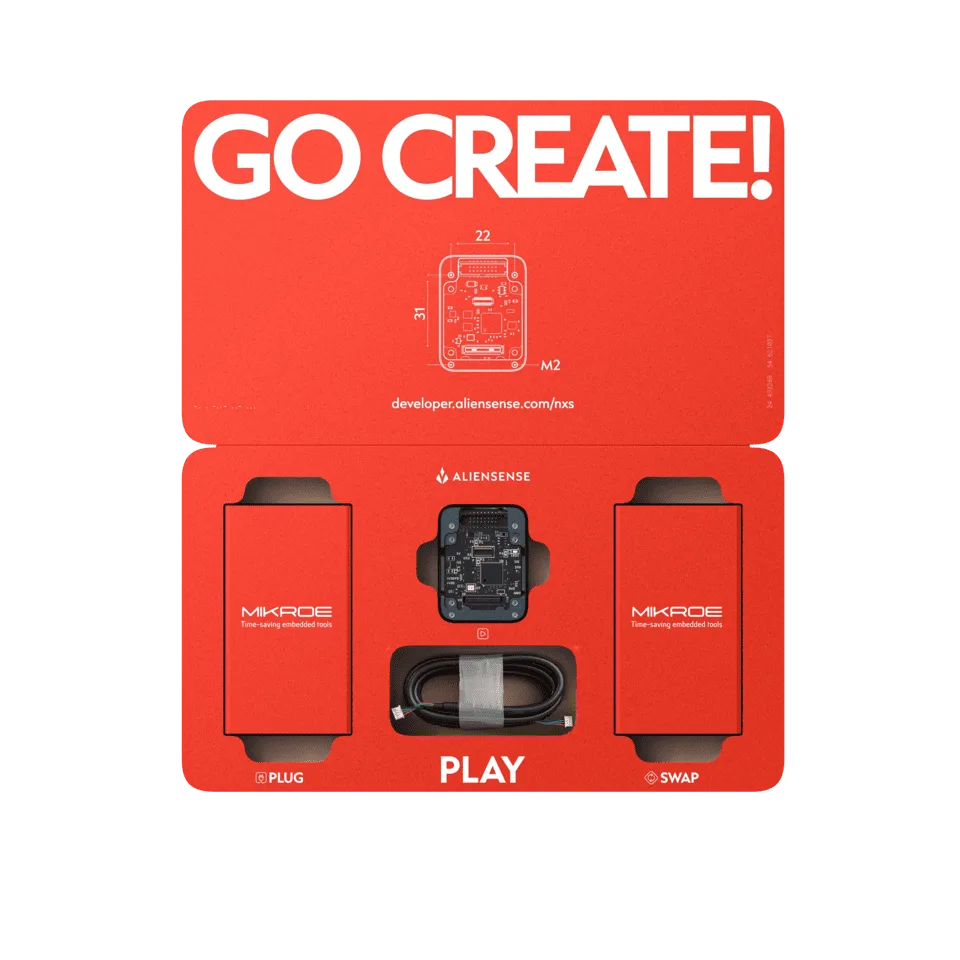
MikroE 6DOF IMU 13 Click
A ready-to-test motion sensor for first readings, orientation experiments, and sensor pipeline validation.
NXS board
The main connection board for cameras, sensors, CAN-FD, GMSL, and serial workflows.
MikroE mikroBUS Shuttle
A simple way to connect and test mikroBUS Click sensors during prototyping.
Connector cable
The cable needed to bring the setup together and start testing on the bench.
Honeycomb Carton Packaging
A beautiful, engineer-friendly honeycomb paper board shell that is rugged, highly expressive, and 100% environmentally friendly.
MikroE 6DOF IMU 13 ClickMIKROE-4228
A ready-to-test motion sensor for first readings, orientation experiments, and sensor pipeline validation.
NXS board
The main connection board for cameras, sensors, CAN-FD, GMSL, and serial workflows.
MikroE mikroBUS ShuttleMIKROE-2882
A simple way to connect and test mikroBUS Click sensors during prototyping.
Connector cable
The cable needed to bring the setup together and start testing on the bench.
Honeycomb Carton Packaging
A beautiful, engineer-friendly honeycomb paper board shell that is rugged, highly expressive, and 100% environmentally friendly.
Compliance & Standards
Designed to meet global standards






Vanguard Edition
Limited batch. Numbered units.
In stock and shipping now. Allow 5-10 days in transit after dispatch, depending on destination.
What Vanguard gets you
Direct channel to the engineering team
Talk to the people who designed NXS and the others running it on autonomous vessels, AGVs, field rovers.
Priority on driver generation
Send us the sensor you need running. Vanguard requests go to the front of the queue.
First look
New features and new products before they are public.
Cancel any time before dispatch. Full refund, processed within one business day. Secure checkout via Stripe. Shipping is billed separately before dispatch.
FAQ
Frequently asked questions
Everything you need to know about NXS: hardware, sensors, integration, ordering, and support.